
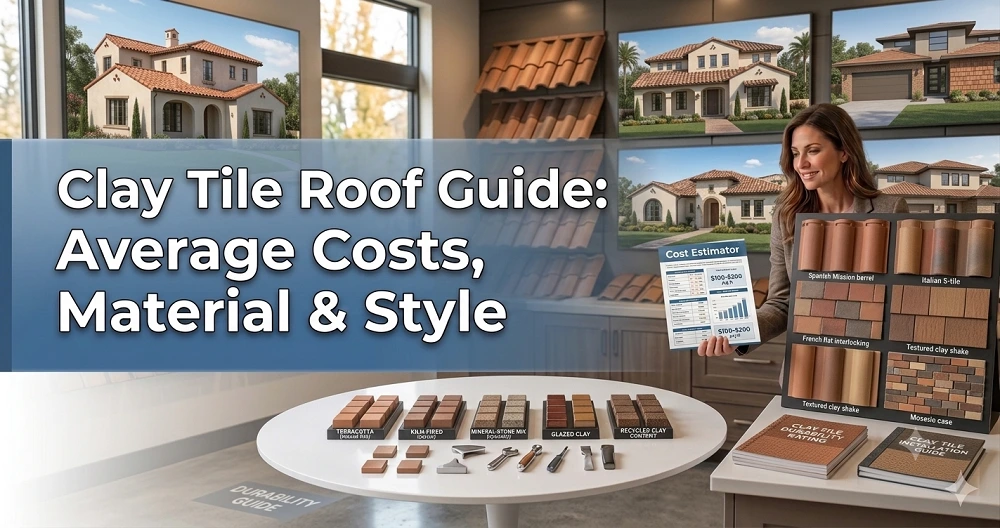
Clay Tile Roof Guide: Average Costs, Material & Style
A Clay Tile Roof has been admired for centuries, and it’s easy to see why. Its distinctive appearance adds timeless character to a home while offering exceptional durability against harsh weather and years of exposure to the elements. From Mediterranean villas to Spanish Colonial homes and modern custom residences, clay tile remains one of the most recognizable roofing materials available.
Although a Clay Tile Roof typically requires a larger upfront investment than asphalt shingles or some metal roofing systems, many homeowners see it as a long-term upgrade rather than simply another roof replacement. Its impressive lifespan, low maintenance needs, and architectural appeal make it a popular choice for those looking to combine beauty with performance.
If you’re considering a clay tile roof for your home, understanding the costs, materials, styles, and installation requirements can help you determine whether it’s the right fit for your property.
How Much Does a Clay Tile Roof Cost?
Installing a Clay Tile Roof is generally more expensive than many conventional roofing materials, but several factors contribute to the overall cost beyond the tiles themselves.
The total investment often depends on:
- Roof size
- Roof pitch and complexity
- Type and quality of clay tiles
- Structural support requirements
- Removal of the existing roofing material
- Underlayment and flashing upgrades
- Local labor rates
Industry estimates place professionally installed clay tile roofing between approximately $10 and $30 per square foot, though premium products, custom colors, or highly detailed roof designs can increase costs further. Because clay tiles are significantly heavier than asphalt shingles, some homes may also require structural reinforcement before installation, adding to the overall project budget.
Instead of focusing solely on the initial price, it’s helpful to consider the roof’s expected service life. A properly installed clay tile system can often protect a home for several decades, and in some cases, well over a century with regular maintenance.
Average Clay Tile Roof Costs by Roof Size
Every roofing project is unique, but these general estimates can help homeowners begin planning their budget.
| Roof Size | Estimated Installed Cost |
| 1,000 sq. ft. | $10,000–$30,000 |
| 1,500 sq. ft. | $15,000–$45,000 |
| 2,000 sq. ft. | $20,000–$60,000 |
| 2,500 sq. ft. | $25,000–$75,000 |
| 3,000 sq. ft. | $30,000–$90,000 |
Actual pricing varies depending on your location, roof design, and the specific clay tile product selected.
What Makes Clay Roofing Different?
Unlike many roofing materials manufactured from metal, fiberglass, or petroleum-based products, clay roofing tiles are made by shaping natural clay and firing it in high-temperature kilns. This process creates a dense, durable roofing material capable of standing up to years of sun exposure, rain, and changing weather conditions.
The natural composition of clay gives each tile subtle variations in texture and color, creating visual depth that many homeowners appreciate. Even as the roof ages, its appearance often develops additional character without sacrificing structural performance.
Popular Clay Tile Roof Styles
One of the biggest advantages of a Clay Tile Roof is the variety of styles available. Different profiles allow homeowners to match the architecture of their home while achieving the desired appearance.
Spanish Barrel Tiles
Spanish barrel tiles are perhaps the most recognizable clay roofing style. Their curved “S” profile creates alternating ridges and channels that efficiently direct water away from the roof while producing the classic Mediterranean look.
Mission Tiles
Mission tiles feature separate convex and concave pieces layered together to create a traditional appearance. They are commonly used on historic homes and high-end custom residences.
Flat Clay Tiles
Flat tiles provide a cleaner, more contemporary aesthetic while maintaining the durability of traditional clay. They work particularly well on modern and transitional architectural designs.
Interlocking Clay Tiles
Interlocking systems are engineered to fit together securely, improving installation efficiency while providing reliable weather resistance. Many homeowners choose this option for its combination of performance and streamlined appearance.
Benefits of Choosing a Clay Tile Roof
A Clay Tile Roof offers advantages that extend far beyond appearance.
Exceptional Longevity
One of the strongest reasons homeowners invest in clay roofing is its lifespan. With proper installation and periodic maintenance, many clay tile roofs remain functional for 75 to 100 years or more, making them one of the longest-lasting residential roofing systems available.
Excellent Heat Resistance
Clay naturally absorbs and releases heat more slowly than many roofing materials. Combined with the air space created beneath many tile systems, this can help reduce heat transfer into the attic, contributing to improved indoor comfort in warmer climates.
Fire Resistance
Because clay tiles are non-combustible, they provide excellent fire resistance. This makes them an attractive option in areas where wildfire concerns or strict building codes influence roofing choices.
Strong Weather Performance
A properly installed clay tile roof performs well in heavy rain, strong sunlight, and high temperatures. Many products are also designed to withstand significant wind loads when installed according to manufacturer specifications.
Timeless Curb Appeal
Few roofing materials make as strong an architectural statement as clay tile. Whether finished in traditional terracotta tones or modern color variations, a clay roof often becomes one of the home’s defining design features.
Things to Consider Before Installing a Clay Tile Roof
While a Clay Tile Roof offers many advantages, there are several practical considerations homeowners should understand before moving forward.
Weight Matters
Clay tiles are considerably heavier than asphalt shingles and many metal roofing products. Before installation begins, a qualified contractor should evaluate whether the home’s framing can safely support the additional weight.
Professional Installation Is Essential
Unlike lighter roofing materials, clay tiles require specialized installation techniques. Incorrect installation can lead to broken tiles, water intrusion, or reduced system performance.
Choosing an experienced roofing contractor helps ensure the roof is installed according to manufacturer recommendations and local building codes.
Individual Tiles Can Crack
Although clay roofing is extremely durable overall, individual tiles may crack if subjected to significant impact, such as falling tree limbs or foot traffic during maintenance. Fortunately, isolated damaged tiles can often be replaced without replacing the entire roof.
Higher Initial Investment
The upfront cost of a clay tile roof is greater than many alternative roofing materials. However, many homeowners view this as an investment in long-term durability, reduced replacement frequency, and lasting architectural value.
Is a Clay Tile Roof Right for Your Home?
A Clay Tile Roof is an excellent choice for homeowners who prioritize longevity, premium appearance, and long-term performance. It is especially well suited for homes with Mediterranean, Spanish, Southwestern, Tuscan, or Mission-style architecture, although modern clay tile designs also complement many contemporary homes.
Climate also plays an important role. Clay roofing performs particularly well in regions with abundant sunshine and warm temperatures, but many products are engineered to perform successfully in a variety of weather conditions when installed correctly.
Before selecting any roofing material, it’s wise to evaluate your home’s structure, long-term maintenance expectations, and overall renovation budget.
How to Choose the Best Clay Tile Roof for Your Home
Selecting the right Clay Tile Roof involves more than choosing a color or tile profile. Your home’s architecture, local climate, structural capacity, and long-term goals should all factor into the decision.
You’ll also want to compare tile styles, manufacturer warranties, and underlayment systems to ensure every component works together as a complete roofing system. While aesthetics matter, durability and proper installation ultimately determine how well your roof performs over time.
Partnering with an experienced roofing contractor can make the selection process much easier. A professional assessment helps identify the most appropriate clay tile system for your home, confirms whether structural reinforcement is needed, and ensures the roof is installed according to industry best practices.
A thoughtfully selected Clay Tile Roof doesn’t simply protect your home—it enhances its beauty, increases its longevity, and provides lasting confidence for decades to come.